※本ページはプロモーションが含まれます
Disclosure: This post contains affiliate links. If you buy through them, we may earn a commission at no additional cost to you. Learn more.
If you’ve only ever seen ReFa’s platinum rollers on your FYP, you’re missing the other half of the Japanese home-beauty-tech aisle: Panasonic. The same company that makes your rice cooker also runs a full beauty appliance division out of Japan, and it covers a lot more ground than facial devices alone — RF/EMS skin tools, an actual steam facial, hair dryers built around their “nanoe” moisture tech, an epilator line called Soie, cleansing brushes, and scalp care tools. This isn’t a single-product review; it’s a map of the lineup so you know which category to shop in before you spend money on the wrong gadget.
I pulled six real, currently-listed Panasonic devices spanning face, hair, and scalp, with prices as of August 2026 and the actual downside of each — not just the marketing copy.
- Panasonic VITALIFT RF EX (EH-SR86-T) — the flagship face device
- Panasonic Nanocare Steamer (EH-SA0B-N) — steam facial, not just a device
- Panasonic Hair Dryer Ionity (EH-NE6A-N) — where the brand actually started
- Panasonic Soie ES-WS35-P — the epilator line
- Panasonic Facial Cleansing Brush (EH-2S03) — the cheap, unglamorous entry point
- Panasonic Scalp Esthetician (EH-2H06-P) — the one most people forget exists
- How These Fit Into an Actual Routine
- Comparison Table
- FAQ
- The Takeaway
- Related Articles
Panasonic VITALIFT RF EX (EH-SR86-T) — the flagship face device

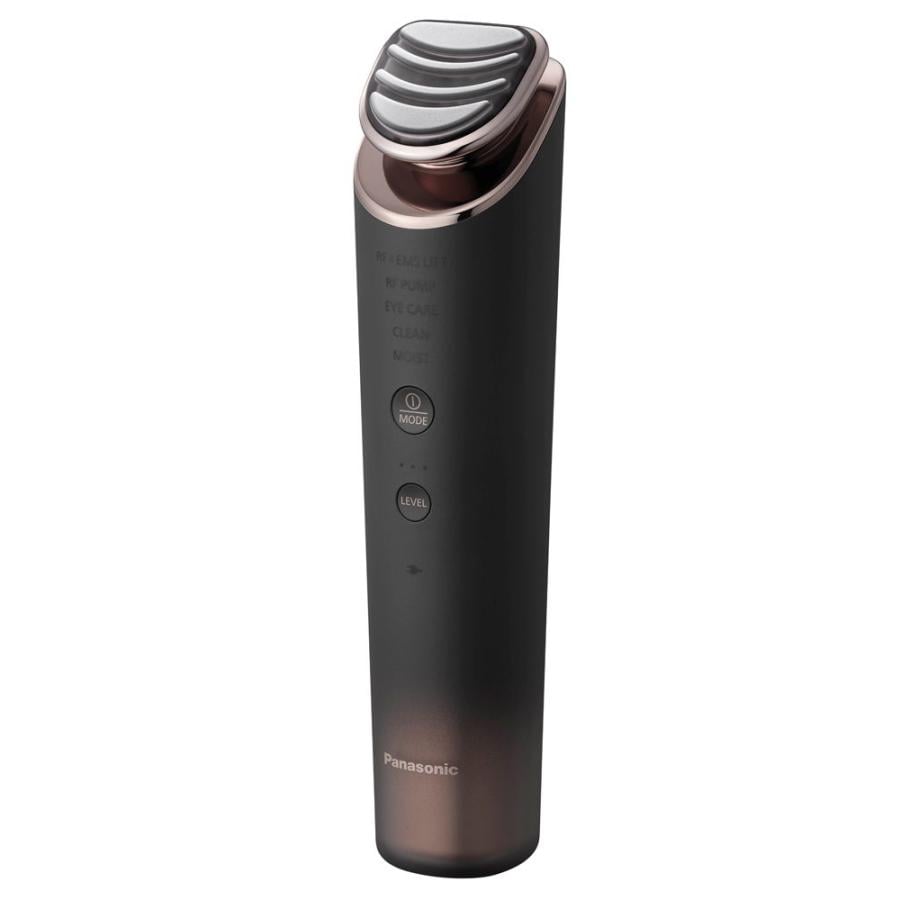
This is Panasonic’s top-tier facial device, released November 2024, and per the listing it packs 13 functions into one handheld unit built around what Panasonic calls Multi-Activate Technology EX — a D-shaped lift head engineered for a warm, gliding lift motion, plus separate modes the listing describes for cheek firming, texture care, eye-area care, and pore care. It’s meant to be used with a compatible gel or serum rather than on bare skin, similar to the RF/ultrasound devices you’d see at a facial clinic, just scaled down for home use. According to Discovery Japan Mall, it runs about 87,427 JPY (roughly $550 USD at August 2026 exchange rates).
Caveat: this is a genuinely premium price for a device you’re operating on yourself without a technician, results described by the brand are framed as “may vary from person to person,” and it’s a Japan-market appliance, so double-check voltage compatibility (most are 100V) and budget for a plug adapter or converter if your outlets aren’t Japanese-spec.
If $550 is more than you want to spend on a first RF device, Panasonic also sells the more compact Sonic RF Lift Care EH-SR75-N for about 34,720 JPY (~$220), which pairs RF with ultrasound and adds a mode for the forehead — a reasonable step-down if you want to try the category before committing to the flagship.
Panasonic Nanocare Steamer (EH-SA0B-N) — steam facial, not just a device

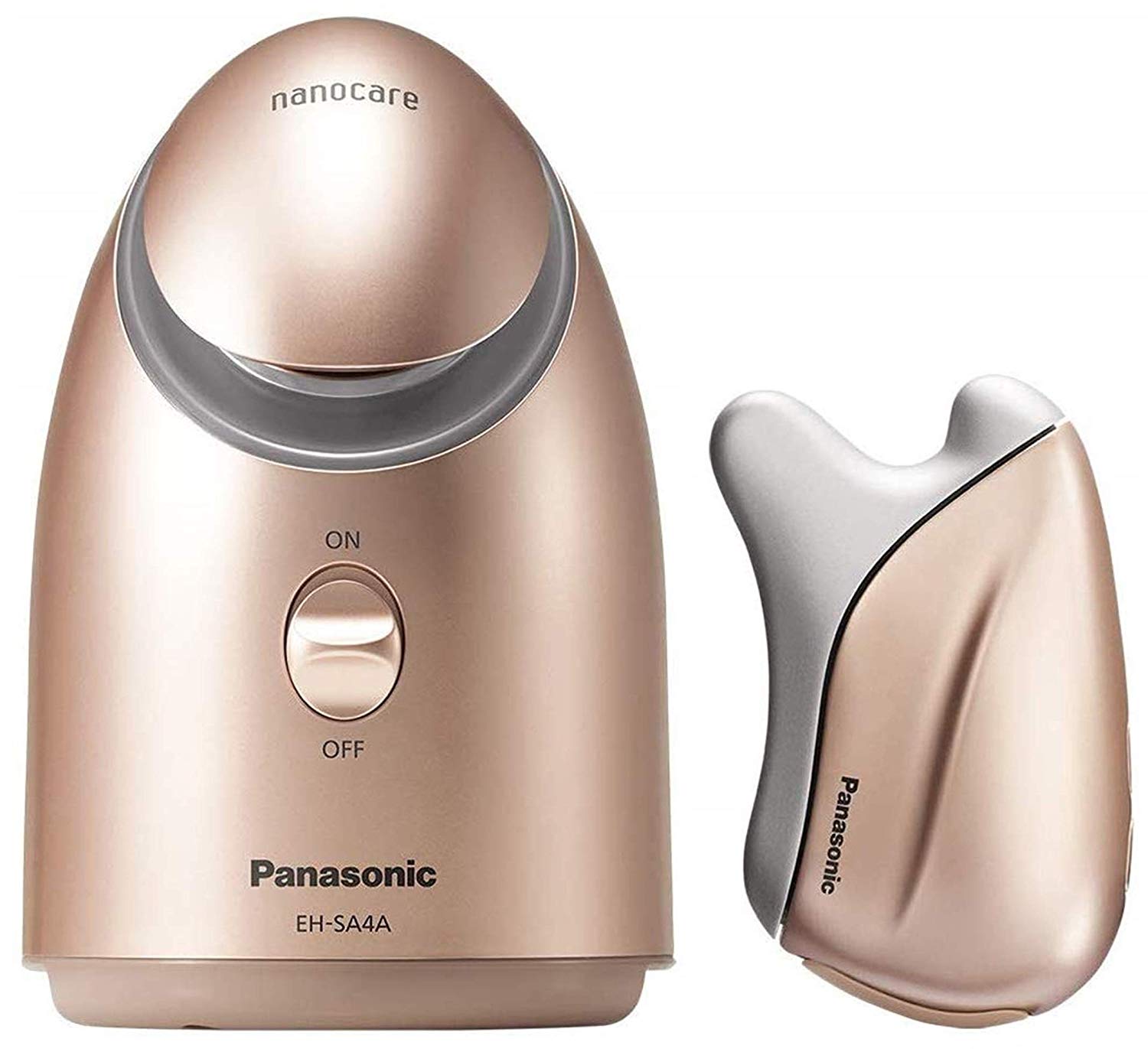
This one isn’t a skin tool you press against your face — it’s a countertop facial steamer, and per the listing it’s the first in Panasonic’s Nanocare lineup to add a lotion-mist function alongside the usual nano-sized warm steam, plus automatic hot-and-cold programs you pick based on what your skin wants that day. The idea is a two-part hydration step: fine warm steam to help skin feel more receptive, then a nano-mist version of your own toner or lotion sprayed evenly over your face. Per the listing, it’s about 47,988 JPY (roughly $300 USD, August 2026).
Caveat: the listing is explicit that this unit is built for Japan’s 100V power only, so if you’re outside Japan you’ll need a step-down transformer, not just a plug adapter — factor that extra cost and bulk in before buying. It’s also a countertop appliance, not a travel item, so it’s really a “you do your skincare at home” purchase.
Panasonic Hair Dryer Ionity (EH-NE6A-N) — where the brand actually started

Before facial devices, Panasonic built its beauty-appliance reputation on hair dryers, and the Ionity line is the mainstream version of that tech (the pricier Nanocare dryers add finer “nanoe” moisture particles on top of the same ion-drying concept). This gold-tone model pushes a 1.9 L/min airflow with what the listing calls “hot/cold twin flow” to help set hair shine, plus a quick-drying nozzle aimed at people with long or thick hair. Per the listing, it runs about 18,140 JPY (roughly $115 USD, August 2026).
Caveat: like most Japan-market small appliances, this is built around Japanese voltage — check the model’s voltage spec against your home outlet before ordering, since not every Panasonic dryer sold domestically is dual-voltage for travel or permanent overseas use.
Panasonic Soie ES-WS35-P — the epilator line

Soie is Panasonic’s dedicated hair-removal line, and this AC-powered model is built around what the brand calls a “Soft Skin Guard” for gentler epilation, rated to catch hair as short as roughly 0.5mm. It ships with two swappable heads — one for legs and arms, one for the underarm/bikini line — and the listing notes it’s built for international voltage compatibility, unlike some of the other Japan-only appliances here. Per the listing, it’s about 7,291 JPY (roughly $46 USD, August 2026), making it the most accessible entry point in this whole roundup.
Caveat: this is a mechanical epilator, meaning it pulls hair from the root rather than cutting it — the listing itself flags that some redness or minor bleeding right after use is normal for some people, and the brand’s own return policy excludes that condition, so this isn’t the pick if you’re epilator-averse or have very sensitive skin.
Panasonic Facial Cleansing Brush (EH-2S03) — the cheap, unglamorous entry point

This is the least flashy device in the lineup and also the cheapest: a small silicone-bristle cleansing brush in the “firm” variant, meant for people who want more scrubbing sensation than Panasonic’s softer brush option. Per the listing, the brush head is rated for about a year of once-weekly use or roughly three months of daily use, and it runs about 3,774 JPY (roughly $24 USD, August 2026).
Caveat: “firm” cleansing brushes aren’t the right call for actively irritated, sunburned, or freshly-exfoliated skin, and if you’re also using retinol or acids, a stiff brush on the same nights can be more friction than your barrier wants — save it for nights your skin feels calm.
Panasonic Scalp Esthetician (EH-2H06-P) — the one most people forget exists

Panasonic also makes scalp-care tools, and this compact device pairs a silicone kassa-style attachment for scalp massage. It’s genuinely tiny — about 89 x 31 x 89mm and 57 grams — so it’s more of a targeted massage tool than an all-over head device, meant to be used with shampoo in the shower or with an oil pre-wash. Per the listing, it’s about 5,216 JPY (roughly $33 USD, August 2026).
Caveat: the attachment itself has a limited lifespan (the listing estimates about a year before it should be replaced), and because it’s a manual massage tool rather than a vibrating or heated device, the sensation is closer to a scalp brush than a spa treatment — don’t expect it to feel like a salon scalp massage.
How These Fit Into an Actual Routine
None of these replace each other — they sit at different steps. A realistic order: Soie epilator for hair removal (its own separate routine, not a daily step), cleansing brush during your regular face wash, steamer as an occasional at-home facial before a mask or heavier serum night, the RF/EMS face device at the very end of your PM routine over a compatible gel, scalp tool during a shower shampoo, and the hair dryer whenever you’re drying your hair — ideally on a cool or medium setting rather than max heat every time, since heat is heat regardless of the ionizing tech layered on top.
Comparison Table
| Product | Category | Approx. Price (Aug 2026) | Best For |
|---|---|---|---|
| VITALIFT RF EX EH-SR86-T | Face – RF/EMS, 13 functions | 87,427 JPY (~$550) | Full-featured anti-aging routine step |
| Sonic RF Lift Care EH-SR75-N | Face – RF/ultrasound | 34,720 JPY (~$220) | Budget entry into RF facial devices |
| Nanocare Steamer EH-SA0B-N | Face – steam + lotion mist | 47,988 JPY (~$300) | Occasional at-home facial step |
| Hair Dryer Ionity EH-NE6A-N | Hair – ion dryer | 18,140 JPY (~$115) | Everyday drying, long/thick hair |
| Soie ES-WS35-P | Hair removal – epilator | 7,291 JPY (~$46) | Budget-friendly epilation |
| Cleansing Brush EH-2S03 | Face – cleansing | 3,774 JPY (~$24) | Cheapest way to try the brand |
| Scalp Esthetician EH-2H06-P | Scalp – massage tool | 5,216 JPY (~$33) | Targeted scalp massage add-on |
Prices are approximate USD conversions from JPY listings as of August 2026 exchange rates and exclude shipping/customs; check the live listing for the current price before buying.
FAQ
Is Panasonic’s beauty line comparable to ReFa?
They overlap in the RF facial device category, but they’re built differently — ReFa’s rollers run on light-powered microcurrent with a manual rolling motion, while Panasonic’s face devices are typically powered, plug-in units combining RF, ultrasound, or EMS with more built-in “modes.” If you’re deciding between the two, our ReFa Facial Roller Guide breaks down that lineup the same way this one does for Panasonic.
How do I patch test a new Panasonic device before using it on my whole face?
For anything that contacts skin directly (cleansing brush, RF device, epilator), start on a small area — like one side of your jaw or a strip of your forearm — and wait 24 hours to check for redness or irritation before your first full session. If you have a diagnosed skin condition, an implanted medical device like a pacemaker, or are pregnant, check with a doctor before adding any electronic beauty device to your routine, since manufacturer instructions for RF/EMS devices generally advise against use in those cases.
Do these devices work outside Japan, or do I need a converter?
It depends on the model — some, like the Soie epilator here, are built for international voltage. Others, like the Nanocare Steamer, are explicitly 100V/Japan-only per the listing and need a step-down transformer (not just a plug adapter) to run safely elsewhere. Always check the specific model’s voltage rating before plugging it in outside Japan.
How do I verify I’m buying an authentic Panasonic device and not a knockoff?
Buy from a listing that’s clearly sourced from Japan with a matching model number (the “EH-” or “ES-” code) printed on the device itself, and cross-check that code against Panasonic’s official product pages. Unusually steep discounts on a name-brand device are the most common red flag for counterfeits or gray-market resale.
What about shipping and customs since these ship from Japan?
Discovery Japan Mall ships internationally from Japan, so build in shipping time plus the possibility of customs duties or import fees depending on your country — none of that is included in the JPY price listed. Manuals and on-device labeling will typically be in Japanese, so it’s worth searching for an English demo video for any device with multiple modes or buttons before your first use.
The Takeaway
Panasonic’s beauty lineup is wider than most people realize — it’s not just one flagship RF device, it’s a full ecosystem covering face, hair, and scalp, with a price ladder from a $24 cleansing brush up to a $550 flagship. Start with whichever category solves an actual problem you have (drying your hair, cleansing more thoroughly, adding an RF step) rather than buying the most expensive device first, confirm the voltage situation before you order, and treat the results as a gradual routine addition rather than an overnight transformation.
コメント